Designing enamel pins is a creative joy—but turning artwork into a physical product comes with technical realities that many artists only learn through experience.
At 366pins.com, we’ve worked with thousands of pin designers, illustrators, and artists. We’ve seen the same mistakes happen again and again—not because artists lack talent, but because no one explains the manufacturing side clearly.
This guide breaks down the most common enamel pin design mistakes artists make, and—more importantly—how to avoid them without compromising your art style.
Mistake #1: Lines That Are Too Thin for Enamel Pins
This is the most common issue we see.
Illustrations often use:
- Very thin linework
- Hairline details
- Sketch-style outlines
Unfortunately, enamel pins require metal lines thick enough to hold enamel.
Why It’s a Problem
- Lines may disappear
- Pins may look messy or uneven
- Details can break during production
How to Avoid It
- Minimum recommended line thickness: 0.3–0.4mm
- Slightly thicken outlines before production
- Trust manufacturer feedback—this protects your design
Mistake #2: Too Many Tiny Details
Pins are small. Your canvas is limited.
What looks beautiful on an iPad or screen can become unreadable at 1–1.5 inches.
Common Issues
- Micro text that can’t be read
- Overcrowded scenes
- Facial expressions that blur
How to Avoid It
- Ask yourself: Will this still read from arm’s length?
- Simplify secondary details
- Focus on strong shapes and silhouettes
Less detail often means more impact.
Mistake #3: Expecting Digital Colors to Match Enamel Exactly
Screens lie. Enamel doesn’t.
Many artists expect:
- Perfect gradients
- Ultra-soft pastels
- Exact RGB color matches
But enamel behaves differently than digital color.
Why It Happens
- Enamel is opaque and reflective
- Colors darken slightly during curing
- Some shades don’t translate well physically
How to Avoid It
- Use Pantone colors as references
- Be open to slight adjustments
- Ask for color advice before production
Mistake #4: Not Understanding Soft vs Hard Enamel
Choosing the wrong enamel type can change the entire feel of your pin.
Common Artist Confusion
- Thinking hard enamel is always “better”
- Choosing soft enamel without understanding texture
Quick Guide
- Soft Enamel: Textured, bold, expressive
- Hard Enamel: Smooth, clean, polished
How to Avoid It
Choose based on your art style, not trends.
Mistake #5: Overusing Special Effects Without Purpose
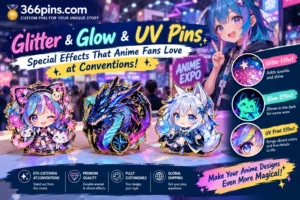
Glitter, glow, UV print, transparent enamel—these effects are powerful, but only when used intentionally.
Common Problem
- Too many effects competing visually
- Effects overpowering the artwork
How to Avoid It
- Use effects to support the concept
- Highlight 1–2 key elements only
- Ask: Does this add meaning or just decoration?
Mistake #6: Skipping or Rushing the Sample Stage
Some artists want to move straight to production to save time or money.
This is risky.
Why Samples Matter
- Catch color or line issues early
- Adjust small details safely
- Prevent costly mistakes in full production
Best Practice
Always review:
- Line clarity
- Color accuracy
- Overall balance
A sample protects your reputation.
Mistake #7: Designing Without Manufacturer Input
Many artists work alone until the final step—then feel frustrated by production limits.
The Reality
Manufacturing isn’t the enemy of creativity—it’s a tool.
How to Avoid It
- Ask questions early
- Share concepts, not just final files
- Treat your manufacturer as a creative partner
At 366pins.com, we prefer guiding artists before problems happen.
Mistake #8: Underestimating the Importance of Metal Finish
Metal color changes everything.
Common finishes include:
- Gold
- Silver
- Black nickel
- Antique finishes
Choosing the wrong one can:
- Reduce contrast
- Flatten the design
- Hide details
Always consider metal finish as part of your color palette.
Final Thoughts: Mistakes Are Part of the Creative Journey
Every experienced pin artist has made at least one of these mistakes.
The key difference between frustration and success is learning early and choosing the right partners.
With the right guidance, your enamel pins can:
- Stay true to your original illustration
- Feel premium and intentional
- Make you proud every time you see them in someone’s collection
How 366pins.com Helps Artists Avoid These Mistakes
We don’t just manufacture pins—we help artists succeed.
✔ Clear communication
✔ Honest design feedback
✔ Artist-friendly support
✔ Respect for your creative vision
🎨 If you’re planning your next pin, we’re here to help you get it right from the start.